
Overview
Traffic control for residential builds, renovations, driveway works, tree removals, skip bins, concrete pumps and small commercial fit-outs. Compliant, affordable and sized for the actual risk.
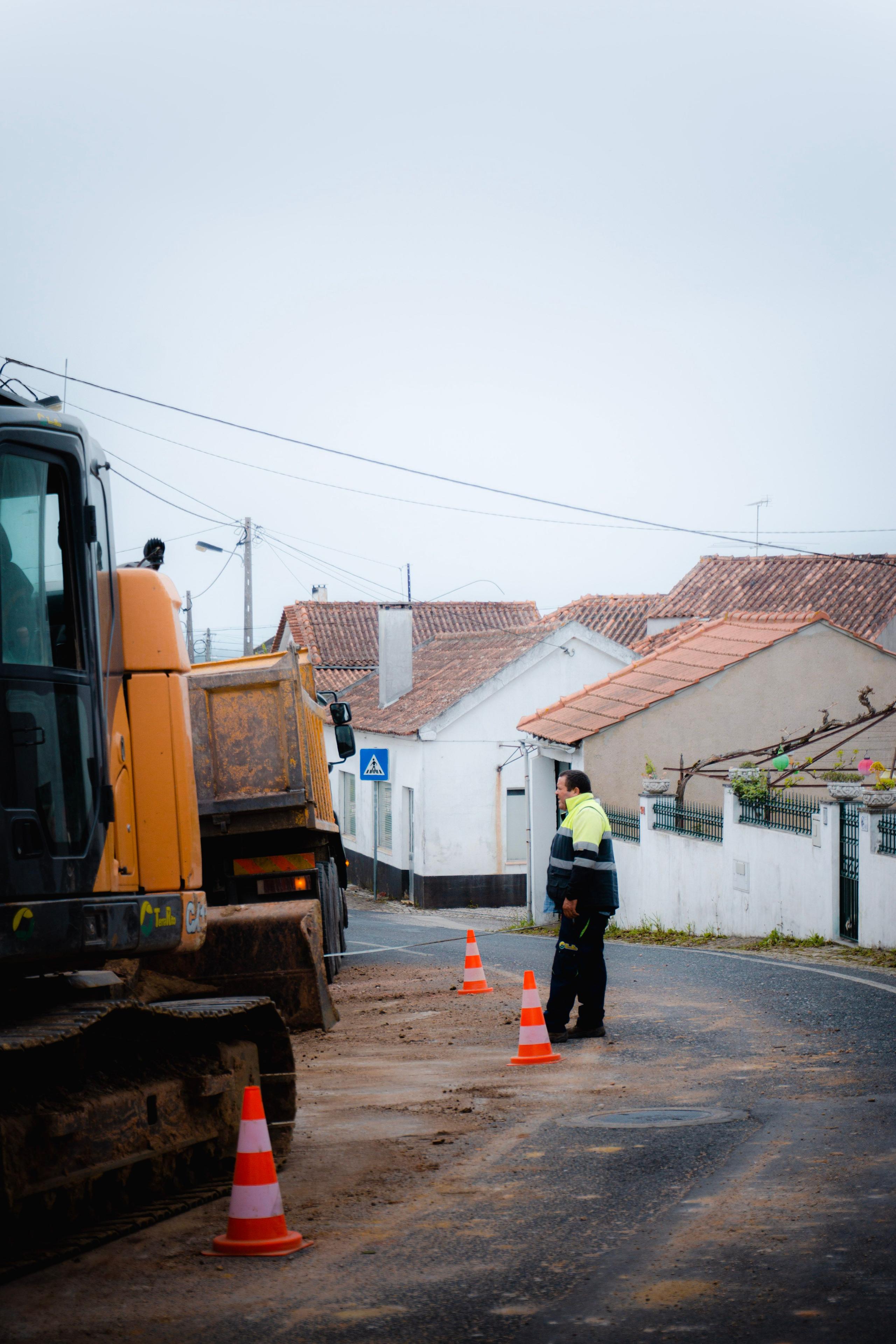
Not every traffic control job is a motorway closure. A lot of NSW road-occupancy work is residential scale — a skip bin across a footpath, a concrete pump parked in a cul-de-sac, a tree removal blocking one lane, a driveway cross-over, a swimming pool install needing a crane. These still need compliant traffic control under AS 1742.3 and your local council's standing rules, and they still need trained controllers. But they shouldn't be priced like a commercial build.
Our residential and small-works crew is set up specifically for this tier. Compact TGS drawings scaled to the actual risk, small crew sizes (often a single controller for a residential street), transparent flat-rate pricing where possible, and the same TfNSW accreditation our larger commercial crews hold. We're not cutting corners on compliance — we're cutting the padding out of the price.
For homeowners and small builders this usually means one of a few common jobs. Skip bin placement on the footpath is the most common — it needs a council footpath permit and a TGS for pedestrian management. We can sort the permit and supply the TGS, or supply just the controllers if your builder has the permit in hand. Concrete pump setups for residential slabs usually need a partial footpath closure, occasionally a lane closure, and a clean pedestrian detour — we crew these routinely across Sydney. Crane setups for pool installs, roof replacements or multi-storey renovations need a bigger closure, often with nearby driveways affected and neighbour liaison, which we'll handle.
Driveway construction or reconstruction touches the public footpath and often requires a footpath-closure permit plus TGS. Same for kerb-and-gutter replacement in front of a property, which is typically triggered when a property gets subdivided or when the council identifies a maintenance need. We work with landscapers, civil contractors and driveway specialists across Sydney metro regularly.
Tree removal — particularly large trees that cross or overhang the road — needs a closure strategy. We liaise with the arborist, assess the drop zone, and set up a TGS that keeps pedestrians and traffic out of the fall zone. Sometimes that's a single lane for an hour; sometimes it's a full street closure for a morning. We'll tell you which is right for your job.
Small commercial fit-outs — shop fit-outs, small office renovations, cafe builds — often need a footpath loading zone for tradesmen, skips and deliveries. We can set up a standing arrangement with your council for the duration of the fit-out (typically 4 to 12 weeks), with a single TGS covering the period rather than a new permit every week.
Film and photography shoots on residential streets are a growing category for us. Whether it's a corporate shoot, a music video, or a drama production, the production office needs council permits (via Screen Sydney or the local council's film office), a TMP, and controllers on the day. We do all three.
Councils we work with most often at this tier: City of Sydney, Inner West, City of Canada Bay, Northern Beaches, Waverley, Randwick, Woollahra, Bayside, Canterbury-Bankstown, Georges River, Sutherland, Parramatta, City of Ryde, Willoughby, Ku-ring-gai, Hornsby, Lane Cove, North Sydney, Mosman, Hunters Hill, and the major Western Sydney councils. Our residential team knows each council's specific footpath-permit process and approval timeframes.
For homeowners directly, we'll talk straight about what you need and what you don't. If a job doesn't need a full TGS we'll tell you. If your builder is trying to push the traffic-control cost to you unnecessarily, we'll help you understand what's actually required. The goal is to get your job done safely and move on — not to sell you unnecessary services.
Residential and small works — real compliance, real pricing, real crews.
What you get with Residential
Compact TGS drawings sized to the job
Single-controller setups where the risk allows
Council footpath-permit lodgement
Skip bin, concrete pump and crane setups
Tree removal drop-zone control
Small commercial fit-out standing arrangements
Film and photography shoot permits and controllers
Transparent, tier-appropriate pricing
Who we do this for
We tune scope, crew size and gear to the client — here are the teams we most often deliver this service for.
Homeowners and private projects
Residential builders and renovators
Landscape and driveway contractors
Arborists and tree-removal specialists
Small commercial fit-out contractors
Film production and photography crews
When residential is what you actually need
Plain-English triggers — if any of these match your job, this is the service line we'd put you on.
- Skip bin or waste container left on the footpath or kerb-side road for more than a few hours.
- Concrete pump set up across the footpath for a residential slab pour.
- Crane lift for a pool install, roof replacement, second-storey extension or solar array.
- Driveway construction, kerb-and-gutter replacement or pram-ramp upgrade affecting the footpath.
- Tree removal where the drop zone crosses the road or neighbours' frontage.
- Small commercial fit-out needing a standing footpath loading zone for tradies and deliveries.
- Film, photography or stills shoot using a residential street.
- Driveway resurface or paver job that interrupts pedestrian access to neighbouring properties.
Typical projects
A snapshot of the kind of work this service line delivers across NSW every week.
- Skip bin and waste container placements
- Concrete pump setups for residential slabs
- Crane lifts for pool installs and roof works
- Driveway construction and kerb replacement
- Tree removal and large hedge clearance
- Small commercial shopfront fit-outs
How residential jobs come unstuck
Honest list — these are the failure modes we see when traffic control is skipped, under-scoped or handed to a generalist.
Skip-bin operator drops a bin on the footpath without a permit or TGS.
What happens: Council ranger inspection, on-the-spot fine, neighbours complain about pedestrian access, and the bin gets impounded mid-job.
Builder hires cones from a hardware store and DIYs the closure.
What happens: Not compliant under AS 1742.3 — works on roads must be implemented by ticketed personnel. First incident is on the homeowner as PCBU. Insurance defence is uphill.
Concrete pump arrives, no controller booked, pour delayed.
What happens: Concrete truck waits, slump test fails, $1,800 of mix becomes scrap. The pump operator has to walk away too. Repeat callout costs a week's worth of TC budget.
Pedestrian detour ignores DDA — wheelchair users pushed onto the road.
What happens: DDA complaint goes to council, immediate stop on the footpath works, retrofit ramps required, and the home-owner gets the bill.
Crane lift planned without notifying affected neighbours.
What happens: Three driveways blocked for 4 hours, the local Facebook page lights up, and council escalates the next permit request to the elected council members.
From first call to Residential on site
The shape of an engagement on this service line. Same process whether it's a single shift or a multi-year contract — only the scale changes.
Quick scope by phone or email
Tell us the address, what you're doing (skip, pump, crane, tree, driveway), the date and how long. Five minutes is usually enough. We'll tell you immediately whether you need a TGS, a permit, both, or just a controller.
Council permit lodgement
We submit the council footpath or road-occupancy permit on your behalf — same-day for some Sydney LGAs, 5 business days for most, 10+ for a few. We keep the templates for every council we work with, so your application doesn't get rejected on format.
Compact TGS
Single-page TGS scaled to the job — drawn to AS 1742.3 but not bloated. The same drawing standard a builder reviewer would expect on a commercial site, just with the right scope for a residential street.
Single controller (or two), as the risk allows
For a footpath skip, one controller with stop/slow paddle and a folding-sign kit is usually enough. For a bigger closure, we add a second. We don't over-crew small jobs.
On-the-day delivery
Controller arrives ahead of the work window with the gear in their vehicle. Sets up to TGS, runs the closure, and breaks down when your job's done. Daily diary by email, same as our commercial work.
What you're actually paying for
No hidden margin — these are the levers that move the price up or down on every quote we write for this service.
Half-day vs. full-day
Standard residential is a 4-hour minimum. A typical concrete pump runs 4–6 hours; a crane lift is often 4–8. Full-day rates apply once you cross 8 hours.
Permit fee (council pass-through)
Council footpath permits are pass-through — we charge what they charge, no markup. Sydney metro councils range from about $150 to $500 depending on duration and footprint.
Crew size
One controller for footpath skips and short pours; two for crane lifts and full road closures. We'll tell you which is required — there's no incentive for us to inflate it.
Time of day
Most residential is daytime. Saturday work is standard rate; Sunday and public holidays carry award loadings. Pre-7am starts and post-6pm finishes cost more — most concrete pumps schedule around this.
Equipment beyond the basics
Cones, A-frame signs and a stop/slow are included. If your job needs water-filled barriers (a multi-day closure), that's listed separately. Most residential never needs them.
Travel outside metro
Greater Sydney is no-extra-charge. Outer metro and regional jobs carry a small mobilisation fee, listed up front.
Real shift, anonymised
One job we delivered on this service line. Names and locations are kept generic; the operating detail is exactly as it ran.
Inner-west pool install with crane lift — single Saturday
Homeowner in a tight inner-west street, fibreglass pool drop into a backyard via 30-tonne crane parked on the road. Three driveways affected, 50 km/h street, council requiring a Section 138 road-opening permit and a compact TGS. We lodged the permit with 8 business days' notice (council was 5-day standard), drew a one-page TGS, doorknocked the four affected neighbours with a printed notice 4 days out, and ran two controllers on the day from 7am to 1pm — full road closure for the lift window (90 minutes), single-lane during set-up and pack-down. Pool craned in clean. No complaints to council. Total cost to the homeowner was lower than the pool company's panic quote from a national operator, because we sized the job to the actual risk.
Regulations & accreditation
Every Residential job is delivered to the current NSW standards and codes of practice.
Regulations we work to
- AS 1742.3:2019 Traffic Control for Works on Roads
- Local Council footpath standing-vehicle permits
- Council Section 68 approvals for longer closures
- SafeWork NSW WHS Regulation 2017
- TfNSW TCAWS for classified-road frontages
- Screen Sydney / local film office permits
Residential — FAQs
Frequently asked questions
Residential across NSW
Our most-requested NSW locations for this service. Click through for local detail — landmarks, major roads, project history and response times.
Other services we run alongside residential
Most NSW projects need more than one of our service lines at some point. Here are the ones we hand off to most often on this kind of job.
Construction Traffic Control
Traffic control that keeps your build on program.
See ConstructionUtility Works (Ausgrid, Sydney Water, Jemena, Telstra)
Utility-aware traffic control that matches your response window.
See Utility WorksTraffic Management Plans (TMP & TGS)
TMPs and TGS drawings that pass council and TfNSW first time.
See TMP & TGSSpecial Events Traffic Management
Event traffic plans that actually survive the day.
See EventsNeed residential on your NSW site?
Send your dates, site address and scope — we'll come back with a crew, a gear list, and a fixed quote.